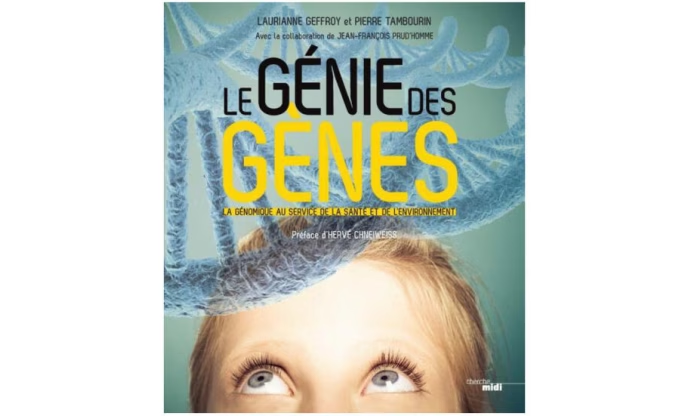
This popular science book takes us on a fascinating journey through the history of genetics. From Gregor Mendel and his experiments on peas in the 19th century, to revolutionary genomic editing technologies like CRISPR-Cas9, the work reveals how humanity has progressively deciphered the code of life.
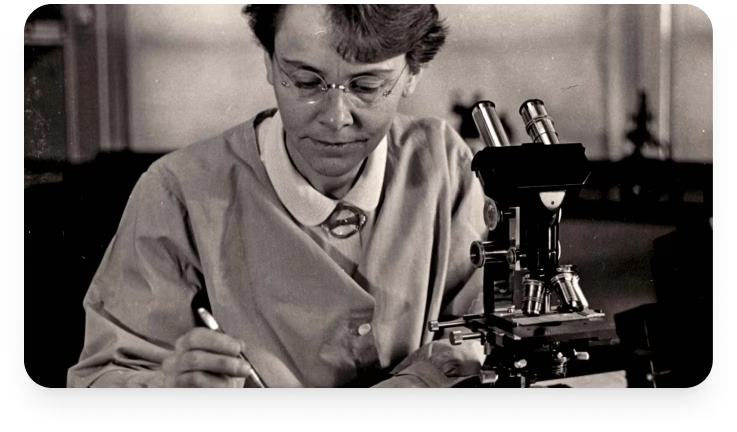
The author particularly emphasizes the contributions of women scientists that have been essential but largely unknown. Rosalind Franklin holds a central place, with a detailed analysis of her crystallography work that revealed the double helix structure of DNA. The book also reveals the difficulties she faced in a male-dominated scientific environment.
"Genetics is not only a science of the past and present, it is also and above all a science of the future and our responsibilities."
— The Genius of Genes
Barbara McClintock, an American geneticist who discovered transposons (mobile genetic elements), is also highlighted. Her revolutionary work was initially rejected by the scientific community before she finally received the Nobel Prize in 1983, at the age of 81. Her story perfectly illustrates the Matilda Effect.